
Institutional R&R Route:
From complexity to results in your green infrastructure.
How we work to help your municipality move from stalled diagnoses to executed projects.
Published on September 11, 2025 · Category: R&R Route

In many municipalities, the same pattern repeats itself: extensive environmental assessments or plans are drawn up, but the projects are never implemented. Grants are approved, but lost due to lack of time or resources. Documents are drafted, but remain gathering dust in drawers. This situation is common even in large-scale European strategies, where the key lies in local implementation. (European Environment Agency – Nature-based solutions in cities).
That's where the R&R Route for Institutions. This is not just another technical report or a generic recipe. It's how we work at Rumbo & Resultados: our own methodology, developed from experience in public administrations and real green and blue infrastructure projects, where the important thing wasn't having a pretty PDF, but activating projects and achieving visible results in the city.
The R&R Route is modular: you can start with operational diagnosis, strategy, action plan, or execution. Each module provides value on its own, but together they form a system that helps municipalities move from paralysis to tangible results.
1. Origin and philosophy of the R&R Route institutions
The R&R Route stems from a simple observation: many city councils already know what they want to improve in their city —more greenery, better water management, more livable streets—, but they fail to organize the path to get there.
The big consulting firms They deliver academic reports that are dense and difficult to apply in medium-sized municipalities.
Isolated technical audits They rarely translate into a viable operational plan.
- The municipal teams They are often overwhelmed with limited human resources
The three pillars of the R&R Route
Hybrid experience: over 20 years of combined experience in multinationals, startups and local public administrations.
Innovation and technology at the service of the municipalityWe use data, digital tools, and agile methodologies only when they bring real value to management.
Agility and modularityEach phase of the Route can be contracted independently, without endless processes or artificial dependencies.
The goal is not to deliver a justification report, but to leave the municipality ready to act.
Clear philosophy: Less bureaucracy, more action; less theory, more results.
The philosophy is clear: less bureaucracy, more action; less theory, more results.
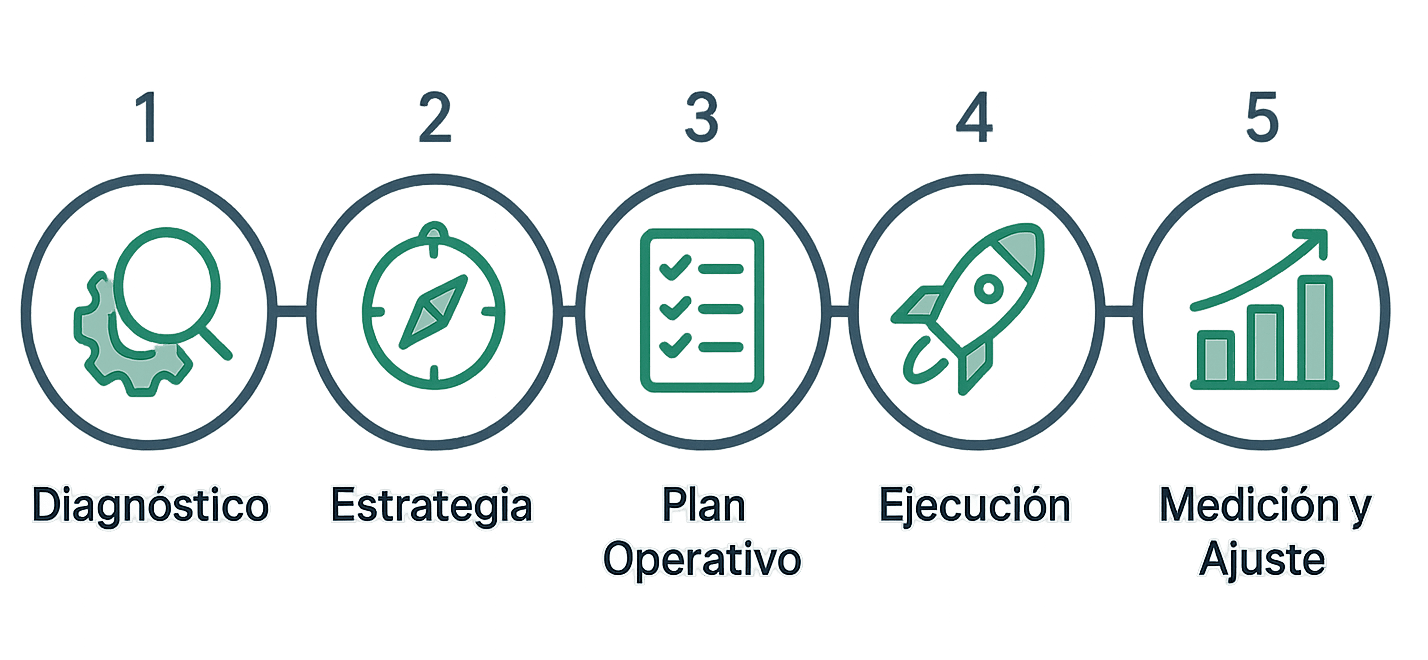
2. The 5 phases of the R&R Route
The R&R Route is structured in five phases. Each can be contracted independently, but together they form a complete journey that transforms and streamlines the planning and execution of green infrastructure strategies.
- Operational diagnosis – quick clarity on the state of green and blue infrastructure.
- Strategy – clear and realistic priorities based on resources and grants.
- Action plan – who does what, when and with what resources.
- Execution – moving from the document to the work or action on the ground.
- Measurement and adjustment – stay the course and demonstrate results to the public.
Phase 1 – Operational Diagnosis
We don't deliver endless or generic reports. The operational diagnosis is brief, actionable, and designed to help the municipality understand exactly what's blocking its progress and where to begin.
What do we do?
-
We reviewed previous plans and studies (urban planning, environment, mobility).
-
We detected overlaps, shortcomings, and critical points.
-
We identified ongoing funding opportunities.
-
We spoke with municipal technicians to get a sense of the reality.
-
We use our own diagnostic document (RFP type), which is much clearer than a standard audit.
What does the institution gain?
-
An Excel spreadsheet with key findings by axis (green, water, connectivity, management).">
-
A report (PDF) with conclusions and initial action plan.
-
An Excel dashboard with 6 indicators ready to start measuring.
What we avoid
-
Dense reports without application.
-
Superficial diagnoses that do not speak with technicians.
-
Recommendations that are not feasible due to cost or resources.
👉 Example: A coastal municipality of 25,000 inhabitants believed its problem was a “lack of parks.” The assessment showed that the green space per capita was sufficient according to international standards. (WHO – Urban green space interventions and health ), but poorly distributed: entire neighborhoods were isolated without ecological connectors. The real priority was to create green corridors, not more peripheral parks.

Phase 2 – Strategy
With a clear diagnosis, we define a prioritized and viable strategy.
What do we do?
-
We turn problems into strategic priorities.
-
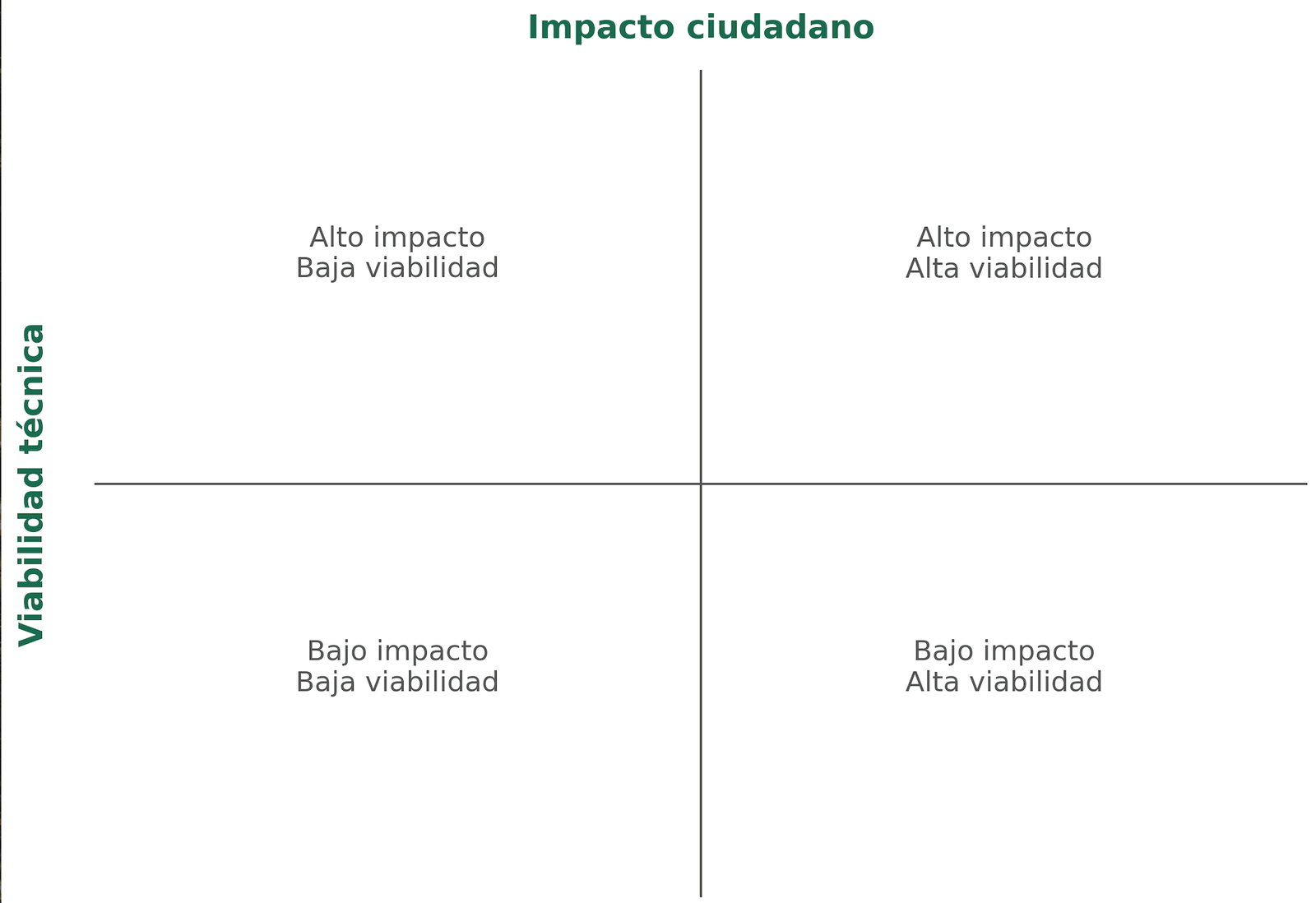
We apply an impact/feasibility criterion (including human resources, not just money).
-
We translated everything into a phased action plan.
What does the institution gain?
-
An Excel spreadsheet with strategic axes, priorities, and phases.
-
Brief visual presentation for political and technical validation.
What we avoid
-
Generic strategies (“greener” without prioritization).
-
Theoretical plans disconnected from local capabilities.
👉 Example: A medium-sized city has 10 projects in its portfolio. Without prioritization, none of them move forward. The strategy determined that three of them (shade at schools, drainage in a flood-prone area, and renaturalization of a riverbank) would have the greatest impact. The rest were moved to later phases. This approach is consistent with the prioritization applied in European green infrastructure plans. (EEA – Nature-based solutions in European cities.)
Phase 3 – Operational Plan
Without a plan, the strategy remains just on paper.
What do we do?
-
We turned the strategy into a timeline with phases, times, and responsible parties.
-
We define coordination committees (technical, political).
-
We created progress checklists by block.
What does the institution gain?
-
Schedule in Excel.
-
RACI matrix with responsible parties.
-
Operational checklists.
What we avoid
-
Plans without clear responsible parties.
-
Backlogs without structured tracking.
👉 Example: In a municipality of 15,000 inhabitants, each department worked independently. The action plan assigned a lead technician to each project and established a weekly coordination committee. Result: Typical delays were reduced by 401%, in line with experiences gathered by municipal networks such as ICLEI – Nature-based solutions case studies ).

Phase 4 – Execution
This is where strategy becomes real action.
What do we do?
-
We provide support as an external Project Manager.
-
We coordinate technicians and suppliers.
-
We activate tenders and guarantee deadlines.
-
We check for blockages and resolve them in real time.
What we avoid
-
Diagnose and disappear.
-
Leave the full responsibility to the municipal team.
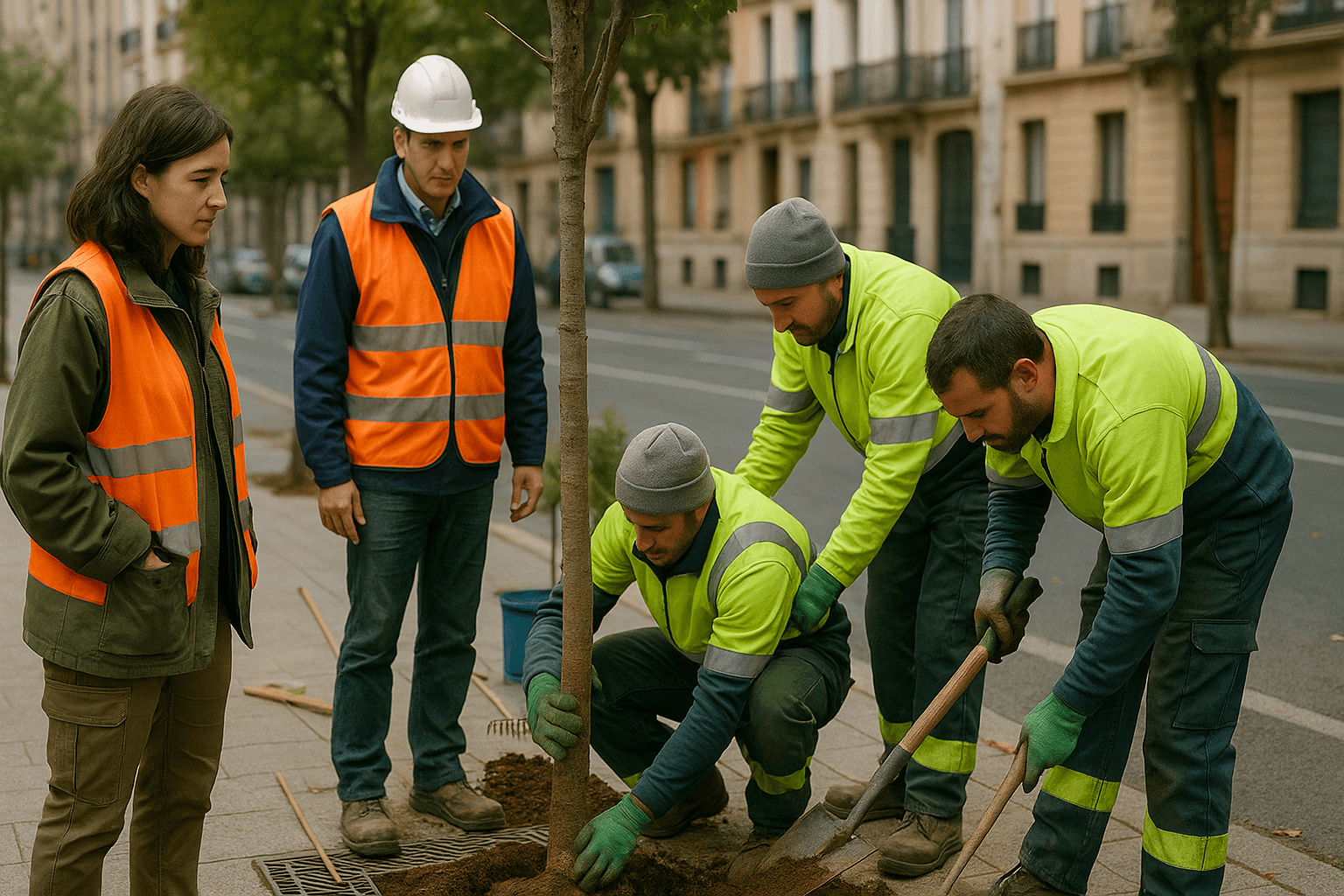
👉 Example: A small town council had been unable to put out to tender for tree planting for eight months despite having secured funding. With weekly coordination and external support, the tender documents were finalized in three weeks and the planting began on time, following the European Commission's green procurement recommendations. (European Commission – Green Public Procurement).
Phase 5 – Measurement and Adjustment
At Rumbo & Resultados, we don't believe in simply delivering a dashboard and disappearing. Measurement is only useful if it helps us understand, anticipate, and adjust. Some European municipalities have made progress with clear indicator systems to validate the real impact on climate comfort, biodiversity, and urban health. (Climate-ADAPT case study: Vitoria-Gasteiz Green Urban Infrastructure Strategy).
What do we do?
-
We define clear environmental and social indicators.
-
We created a simple visual dashboard.
-
We periodically review with equipment.
-
We adjust priorities based on results and feedback.
What we avoid
-
Valueless vanity metrics.
-
Static reports that do not generate decisions.
👉 Example: In a city of 40,000 inhabitants, tree planting interventions had been carried out, but their effect was not being measured. We included a "shade in public space" indicator with temperature sensors. In six months, the intervened squares showed 3°C less, in line with documented cases such as the control squares, Vitoria-Gasteiz Green Urban Infrastructure Strategy.
3. Real-world application examples
These cases reflect real-world situations in institutions. They are not textbook examples, but rather concrete problems that were resolved by applying parts of the R&R Roadmap for institutions.

Medium-sized municipality (30,000 inhabitants) – Overlapping plans and blocked subsidies
- Initial situationIt had accumulated five different plans (trees, drainage, mobility, biodiversity, environment). None of them were coordinated. The team was minimal: an architect, an environmental technician, and an administrative worker. They had been granted a subsidy of several hundred thousand euros within the framework of the NextGenerationEU Recovery Plan for sustainable urban drainage, but they had gone eight months without preparing the specifications.
- What did we do?We applied an operational diagnostic, integrating the five plans into a single priority table. Three key projects were defined, and an action plan was prepared with clear responsibilities. As the external Project Manager, we drafted the tender specifications.
- ResultThe tender was published in 12 weeks, the municipality did not lose the subsidy, and for the first time, the environment and urban planning were aligned.

Small municipality (12,000 inhabitants) – Lack of technicians and administrative overload
- Initial situationIt had only one environmental technician, overwhelmed with files and with no time to coordinate projects. There was a budget available for a green corridor, but its implementation was stalled.
- What did we do?We designed a realistic action plan with phased stages and took on external coordination. We prepared tender documents, brought together suppliers, and ensured the timeline.
- Result: the first section of the green corridor was completed in six months with high community acceptance and minimal additional burden for the technician.
4. Differential benefits of the Institutional R&R Route
What sets us apart is not just our accumulated experience, but having transformed it into our own methodology, tested in real-world projects and constantly evolving with the integration of new technologies when they truly add value. The R&R Route is the system that ensures institutions can move from improvisation and constant firefighting to timely and effective execution with tangible results.
- Order and immediate clarity
- Visible results in weeks
- Adaptation to the level of resources
- Cost competitiveness
- Our own proven methodology
- Autonomy, not dependence
- Real agility
- Cross-disciplinary vision.
5. How to get started with the Institutional R&R Route
The R&R Route is modular: each institution can activate only the phase it needs, according to its situation.
Common entry options
-
Diagnosis: “We know something is wrong, but we’re not sure where.” → We identify real roadblocks and which levers to pull first.
-
Strategy or Operational Plan: “We know where the problem is, but not how to solve it.” → We created a clear plan, with priorities and responsibilities.
-
Execution or Measurement:“We know what needs to be done, but we can’t seem to put it into practice.” → We coordinate teams, lead execution, and ensure measurable results.
6. What we're really looking for when we work with you
At Rumbo & Resultados we know that strategy in the public sector is not theory: it is deciding what to do, what not to do and in what order, with limited resources and under pressure.
Our mission is to help municipalities move beyond stalled plans and advance with real green infrastructure projects. The Institutional R&R Route is designed to bring order, focus, and tangible results to green and blue infrastructure.
👉 I want to take the first step
Download the service sheet or contact us without obligation.
Would you like us to notify you when we publish new content?
We value your time. We'll only send you articles, guides, or tools that help you improve, make better decisions, or take better action.
Our latest publications

AI in local councils: from resistance
What is hindering the adoption of AI in local governments, what changes with the AI Act, and

How to approach a green infrastructure strategy
In many municipalities, the green infrastructure strategy starts with momentum but then cools down amidst paperwork.

Clear institutional communication: keys to effective communication
In a saturated environment, medium and small cities can gain ground if they adapt their messaging

Three mistakes that hinder a strategy of
In recent years, green infrastructure has gone from being an environmental concept to becoming

How to apply AI in municipal management
The municipal teams are exhausted. Every day they draft minutes, reports, specifications, certifications and memoranda; they correct versions,

When institutional communication does not adapt
Digitization is already present in city councils and companies, but it often remains just "publishing on

Adaptation to extreme heat: urgent measures and
Spain's hottest summer on record confirms that extreme heat is already a reality.

From the institutional website to the intelligent service
Municipal websites were created to publish information. Citizens, however, need guidance and results.

Three mistakes when implementing AI in the
Each year, more city councils announce their move to artificial intelligence. The headlines sound promising: automation

Three common mistakes in institutional communication
The most common mistakes aren't strategic; they're in daily execution. Here are three errors that